
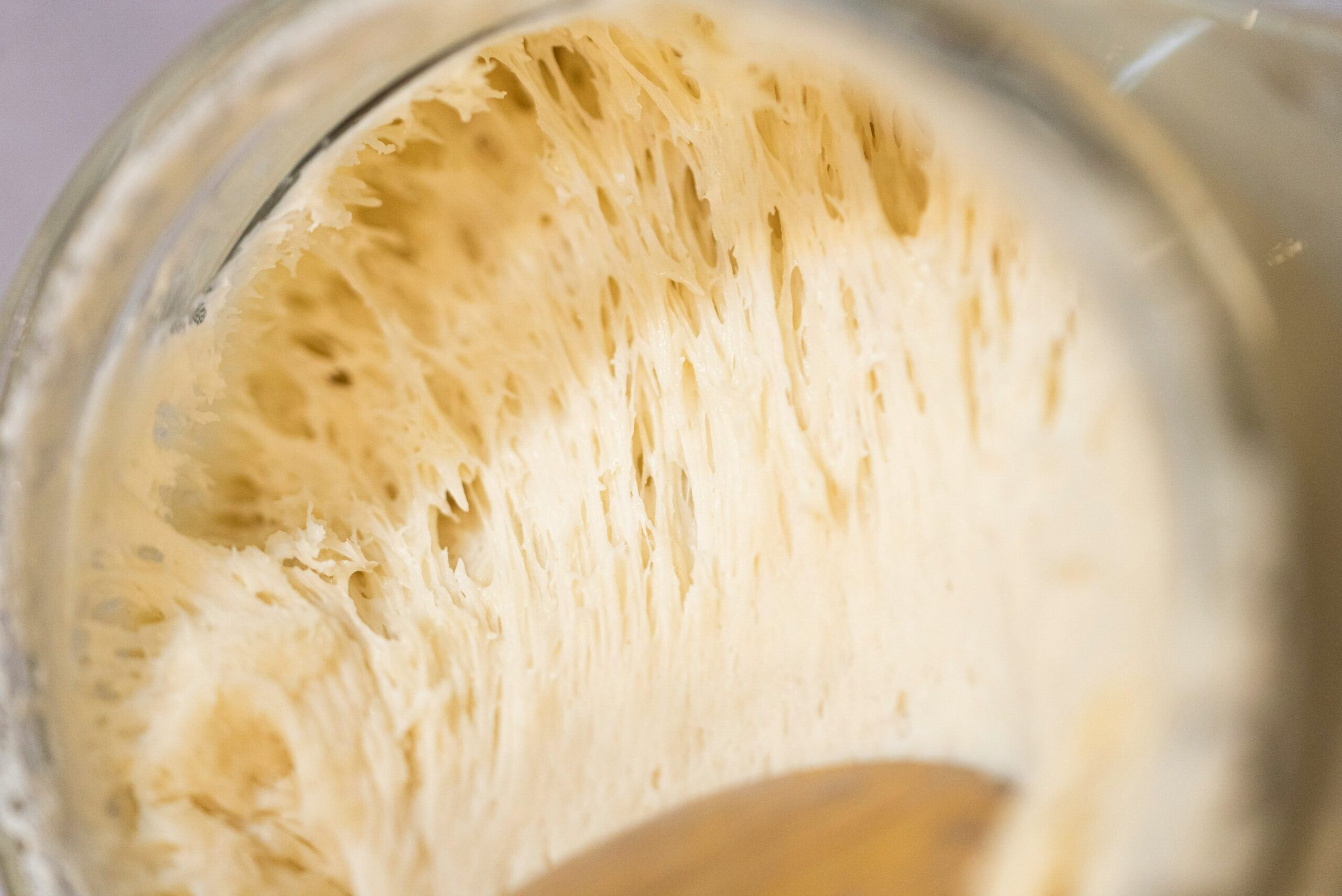
Sourdough is my go-to bread for a reason: fewer ingredients, no yeast, and way better for you than regular bread. There is a reason even some gluten-free folks still sneak a slice.
I get it — sourdough can feel scary. All those bubbles and “starter talk” can make you feel like you accidentally signed up for a chemistry experiment. But I promise: it’s not. The hardest part is just getting started. Think of your starter like a tiny, high-maintenance pet — it’s a little needy at first, but once it’s thriving, it’s very forgiving and easy.
What You’ll Need
- Unbleached flour — all-purpose is what I use, bread flour works too.
- Room-temperature water — spring water is best. Buy a gallon, it’s cheaper than therapy. Do not use tap water. Tap water contains chlorine and will kill your starter before it even starts. I don’t care what some influencer does — no tap!
- A jar or container — any will work, but I linked the exact kit I used [here].
- A spoon or spatula — basically anything that isn’t your finger.
- 1–2 weeks where you’re actually home — it only takes 5 minutes a day, but you need to show up like a responsible adult.
Step 1: Mix Your Starter Together
Start small — you don’t need a gallon of starter to fail spectacularly.
- Add flour and water to your jar.
- Stir until it’s a thick, pancake-batter consistency. Not runny. Not soup. Thick. Think “I could flip this on a griddle” thick.
- Exact measurements? Meh. Sourdough is forgiving. Don’t overthink it.
Step 2: Feed Her Daily
- Every 24 hours (ish), feed your starter with more flour and water until it’s back to that THICC pancake-batter consistency.
- Keep your jar 1/3 full max after feeding, or it will EXPLODE. Trust me, sourdough lava is not fun to clean.
- If it’s full, discard some before feeding — don’t overthink this. A random scoop works just fine. Feed and repeat.
Step 3: Watch It Grow
- In 5–7 days (sometimes longer, these girls are dramatic), your starter should double about 8–12 hours after feeding. Temperature matters, your mood matters… starter moods vary.
- Wait until it consistently doubles for at least 3 days before baking. Patience, my friend.
Step 4: Store It Like a Boss
Once your starter is strong enough to bake with, it’s fridge-ready. Feed it, pop it in the fridge, and forget it exists… until you’re ready to bake again.
- I’ve literally gone 6 months without feeding my starter. It’s fine. It forgives you.
- If it’s been a while, just give it 2–3 feedings and boom — you’re back in business.
*Even if you store it on the counter and you miss a feeding- or 5, it’s fine. As long as there is no mold, your starter will forgive you, I promise.
Pro Tips (Because You’ll Thank Me Later)
- Consistency beats perfection: daily attention > exact measurements.
- Thickness is everything: too runny and your starter sulks. Thick = happy starter.
- Discard before feeding if jar is full: trust me, lava is scary.
Sourdough doesn’t have to be complicated, scary, or stress-inducing. Start small, feed her daily, watch her grow… and suddenly you’re making bread that impresses everyone, even though you totally winged the whole thing.
And don’t forget — once your starter is ready, check out my page for delicious sourdough recipes. From simple artisan loaves to indulgent cinnamon rolls, there’s something for every baking mood.
Items I use:
- Ultimate Starter Kit– The exact one I bought is no longer available but this is one looks to be the most extensive at the best price
- Dutch Oven– My tried and true
- Glass Mixing Bowl– I love a Glass Bowl to see my Bubbles
- Proofing Baskets– These are my favorite but there are some in the “starter kit” if you buy that instead
- Food Thermometer– Sourdough is too much work to cut into raw bread. Temp that ish
- Kitchen Scale– A must for any baking, stop using cups. There is one in the “starter kit” if you buy that instead
- Silicone Baking Mat– This is the one I have but there is one in the “starter kit” if you buy that instead.
- Shower Caps– to cover my dough while proofing, I also use these on my room temperature starter (use a real lid for the fridge)
- Cake Stand– This is honestly how I store my bread to keep it freshest
- Bread Bags– For Gifting to Friends and Family
